


The transition toward Industry 5.0 is redefining electronics manufacturing by prioritizing more efficient, flexible, and human-centric processes, supported by intelligent automation. Within this context, the final or back-end process of the production line becomes especially relevant, since any inefficiency at this stage can directly impact the overall plant yield.
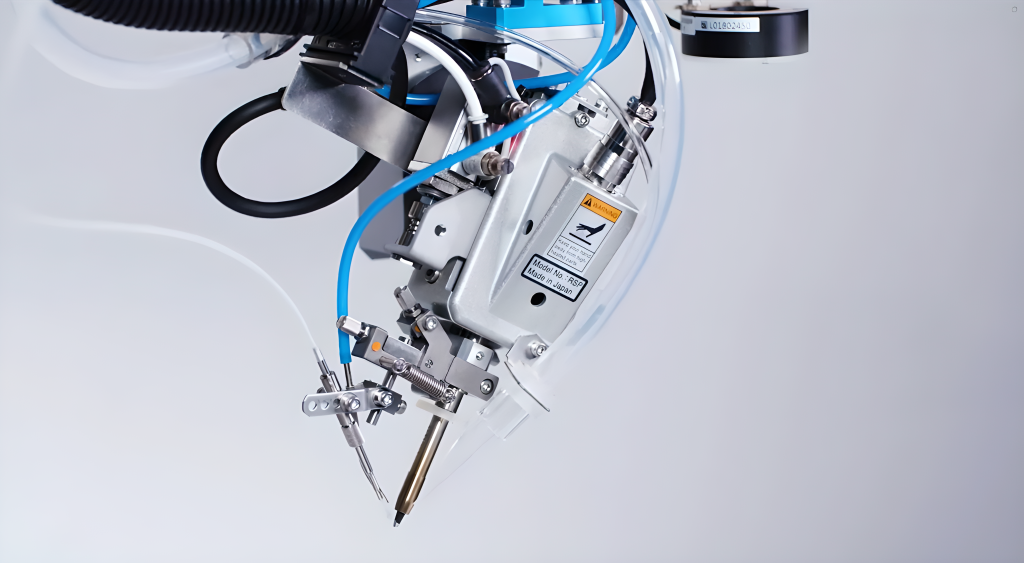
Correctly automating this phase not only reduces dependence on repetitive manual tasks, but also improves the consistency, quality, and traceability of the final product.
Manual soldering tasks in the final process usually represent one of the greatest challenges in terms of repeatability, ergonomics, and quality control. At this point, the in-line Cartesian soldering robots, like Apollo Seiko JC‑3 3 Ejes, become an ideal solution for environments aligned with Industry 5.0.
The JC-3 3 Ejes integrates a 3-axis Cartesian robot with adaptive soldering technology, allowing operations to be configured for contact, iron, or laser soldering processes according to the specific needs of the product and the line.
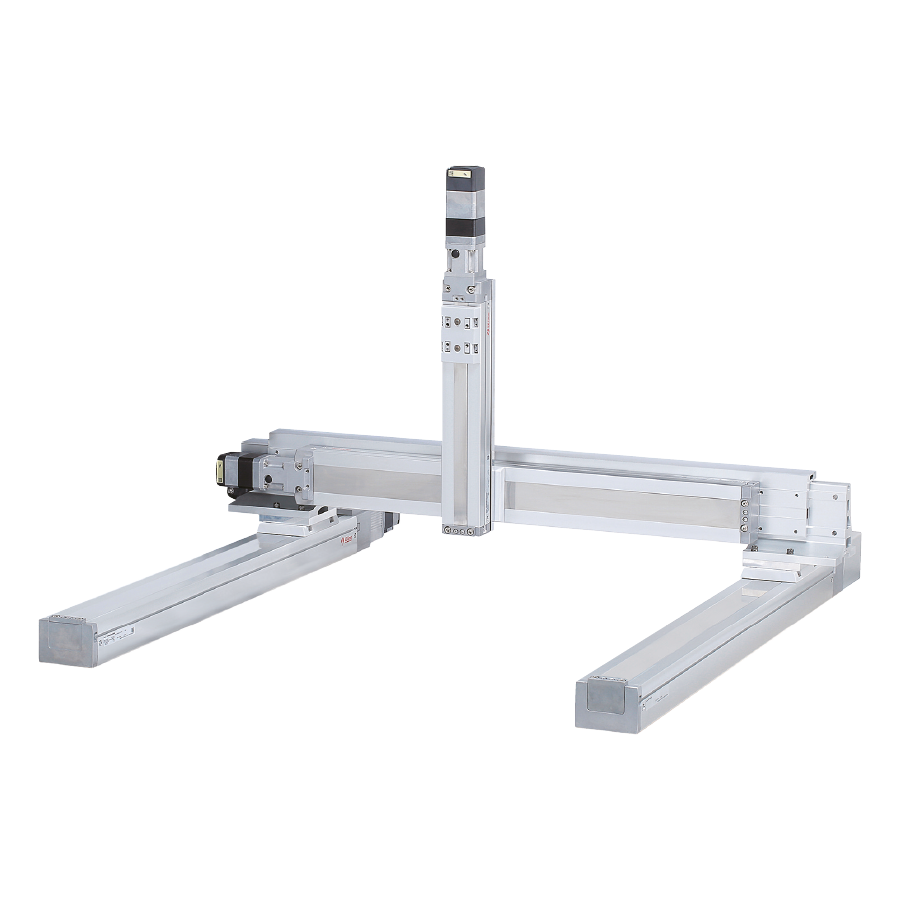
This type of solution offers key benefits such as:
As a complement to this type of solution, the Apollo Seiko J-CAT LYRA extends the capabilities of robotic soldering by incorporating advanced temperature control directly at the soldering iron tip, which allows for more precise thermal management in sensitive components or those with different thermal masses.
The J-CAT LYRA is especially suitable for:
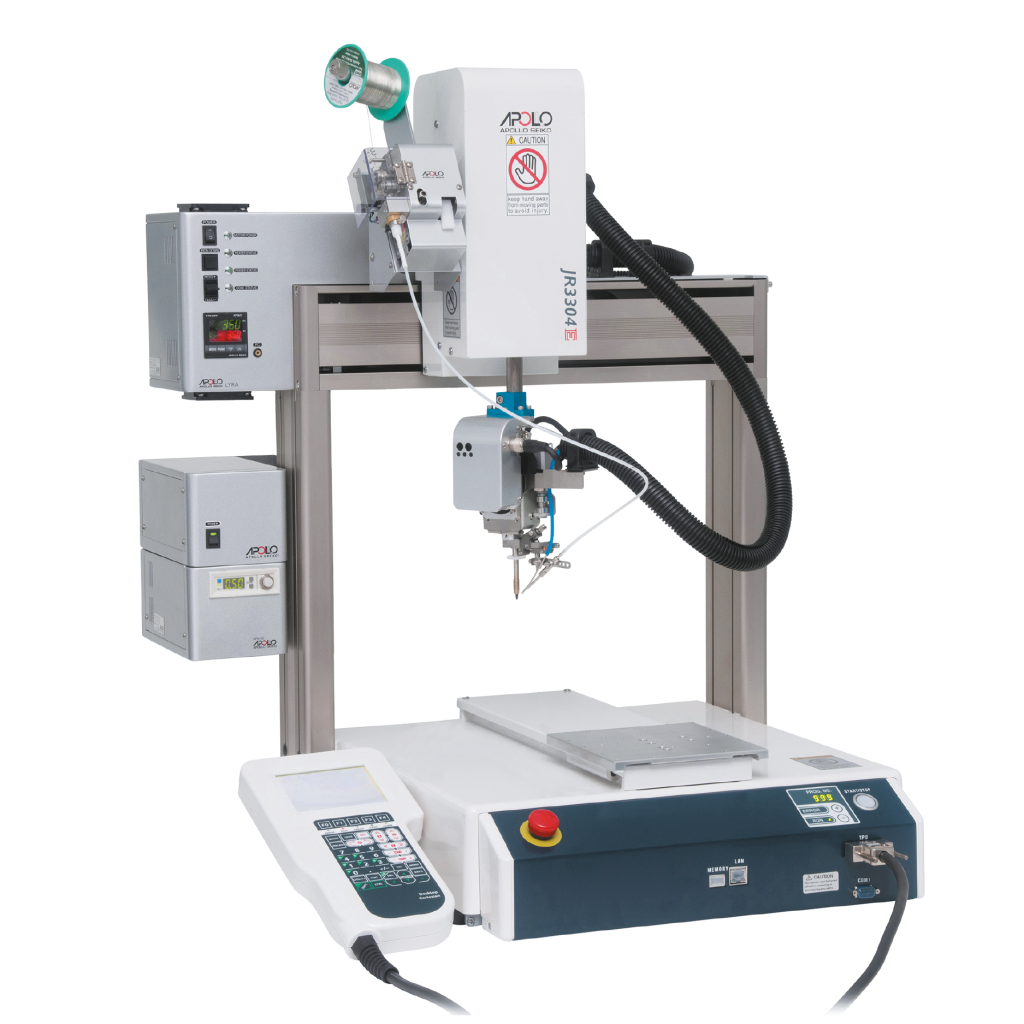
This approach allows back-end automation not only to improve productivity, but also to elevate process control, keeping the operator as a supervisor and system optimizer, in line with the principles of Industry 5.0.
However, automating soldering on its own does not guarantee an optimal production flow. A highly efficient soldering robot can quickly become a bottleneck if the input and output of the boards are not properly managed.
Manual handling or poorly synchronized transport systems lead to:
To avoid this, it is indispensable to integrate automated transport systems that match the pace of the soldering cell.
The PCB transport and handling systems from YJ Link, like SMEMA-compatible conveyors and intelligent buffers, are designed to ensure a stable, orderly, and continuous flow within the production line.
Equipment such as YJ Link Inline Buffer Conveyors allow for process decoupling and absorbing cycle variations, while PCB Loaders y Unloaders ensure automatic board feeding and unloading without constant operator intervention.
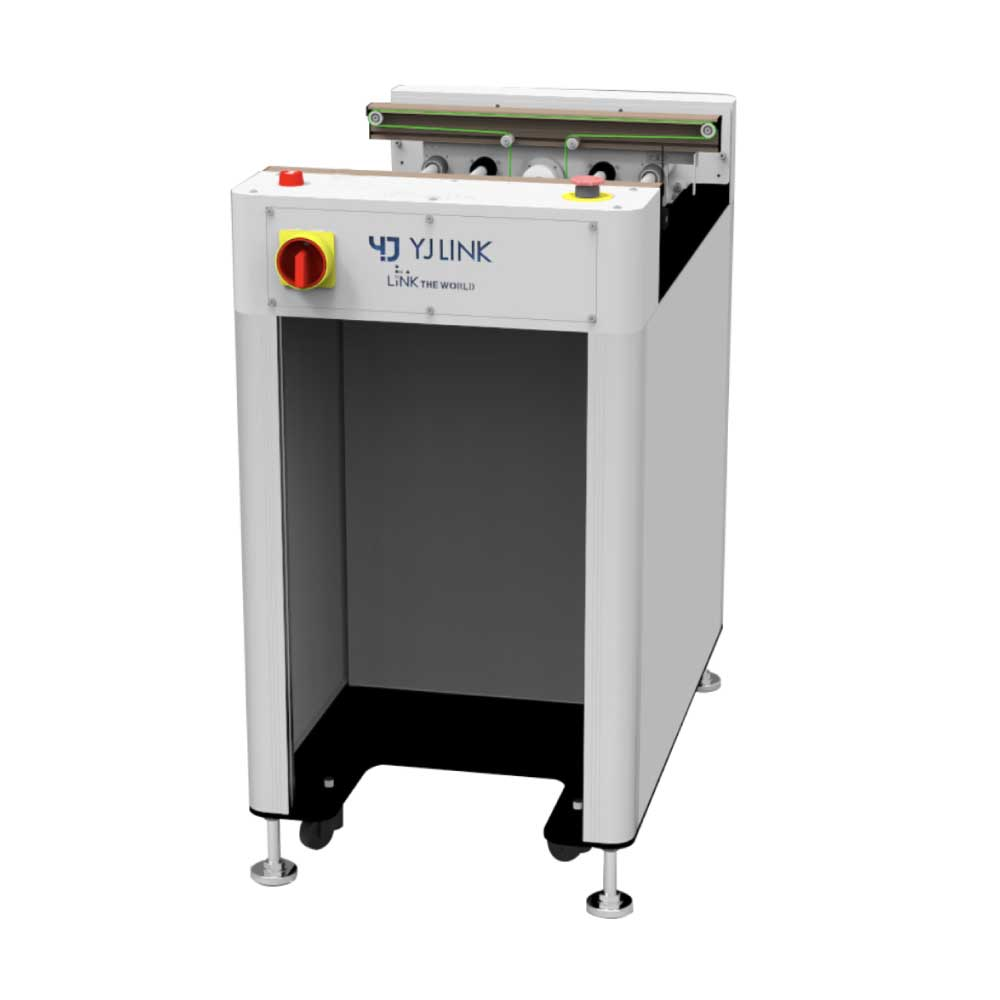
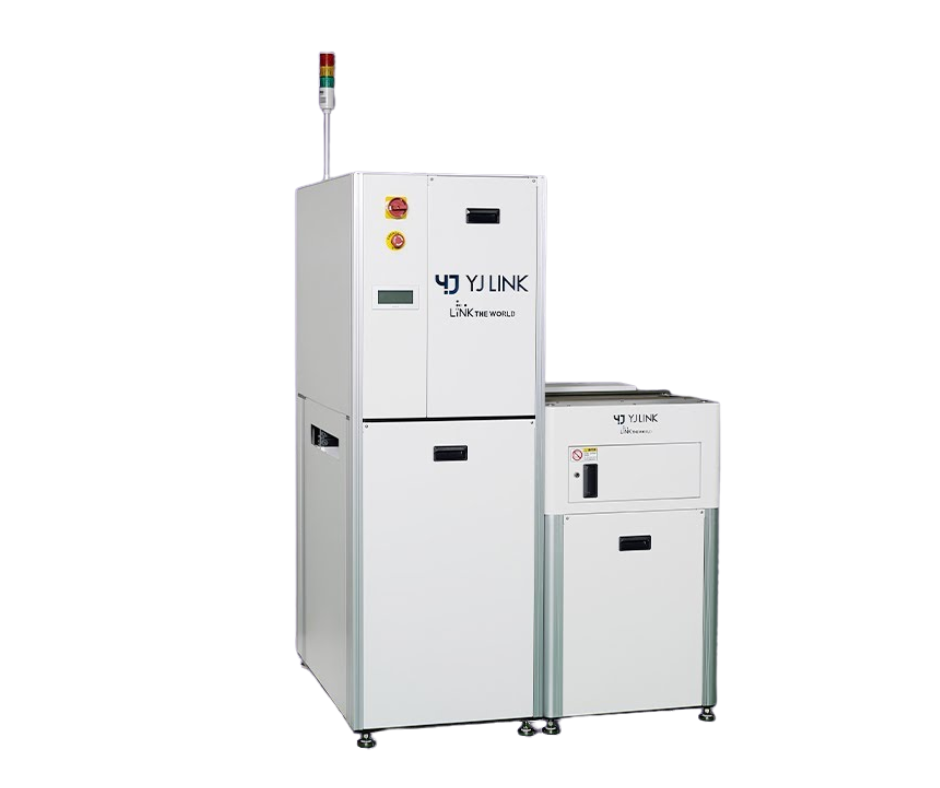
These systems allow for:
By integrating solutions from YJ Link, the soldering robot can operate continuously, maximizing its productivity without unnecessary interruptions.
The combination of soldering robots Apollo Seiko with transport systems YJ Link is a clear example of how Industry 5.0 seeks to harmonize technology, people, and processes. It is not just about automating, but about designing intelligent cells where each piece of equipment adds value without disrupting the global flow.
A well-automated final process:
In the automation of the final process, success does not depend solely on incorporating an advanced soldering robot, but on correctly integrating the entire surrounding ecosystem. Soldering robots Apollo Seiko optimize the critical back-end task, while the transport systems YJ Link ensure that the board flow is constant, fluid, and without excessive manual intervention.